
Chocolate Hills Bohol
Complete Travel Guide and Visiting Tips 2026
The Chocolate Hills are calling you. I know this because I grew up watching them change color with the seasons — brown like rich chocolate during the dry months, then green and lush when the rains came. My mother told me stories about them, legends her grandmother had passed down. Now I’m sharing what I know about getting there, what to expect, and how to make the most of your visit to one of Bohol’s most iconic landmarks.
Whether you’re coming from Tagbilaran City or based in Panglao Island, the Chocolate Hills are within reach for a memorable day trip or extended countryside adventure. Let me walk you through everything.
“I’ve been to thirty countries, and the moment I saw the Chocolate Hills from the viewing platform, I understood why Boholanos are so proud. The landscape is otherworldly. Our guide shared stories I never could have imagined reading online. Life-changing.”
— Maria T., Sydney ⭐⭐⭐⭐⭐
What Are the Chocolate Hills?
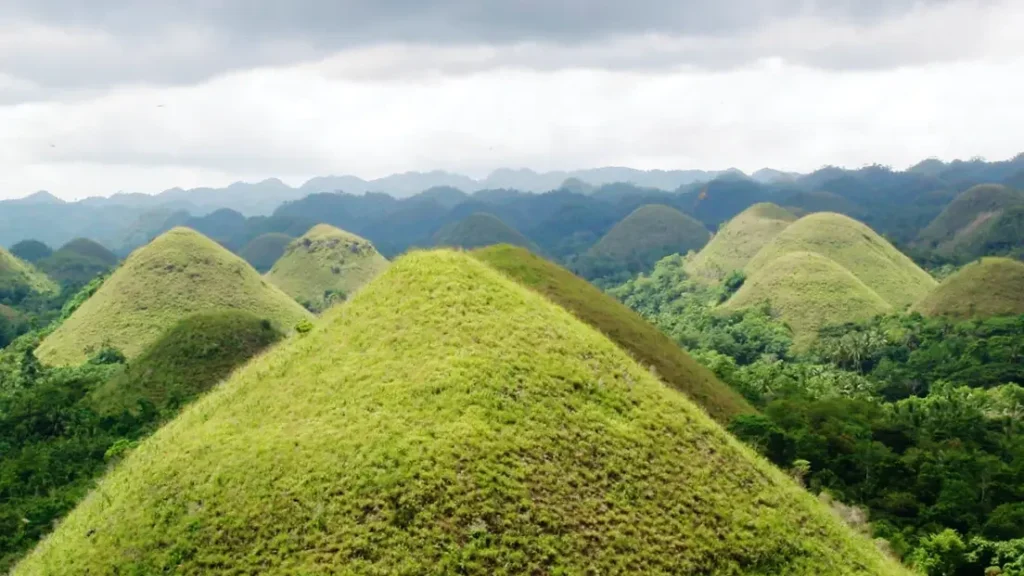
The Chocolate Hills aren’t actually hills made of chocolate—though on a dry season afternoon, when the limestone mounds turn that warm, cocoa brown, I understand why visitors think the name is literal. What you’re seeing is something far more geologically fascinating: 1,268 limestone mounds spread across approximately 50 square kilometers in the municipalities of Carmen, Batuan, and Sagbayan in the heart of Bohol.
These mounds are the result of millions of years of water erosion. Bohol was once covered by a shallow sea. As the land rose and the water receded, limestone—that soft, soluble rock—was carved and shaped by rainwater and underground streams. What remained were these distinctive cone-shaped formations, typically 30 to 50 meters tall, though some reach higher. Stand at a viewing platform and look out across the landscape: you’ll see a sea of green peaks, a sight that genuinely takes your breath away.
The geology is one story. The cultural heart of these hills—what makes them matter to Boholanos like me—is deeper. These aren’t just natural formations. They’re woven into our identity, our legends, our sense of place.
The Legends of the Chocolate Hills
My mother used to tell me stories about the Chocolate Hills while we sat outside at dusk, watching the light change on the mounds. These legends are part of Bohol, passed down through generations, and I want to share them with you because they explain why these hills mean so much to us.
The Giants’ Quarrel
The oldest story goes like this: Two quarrelling giants threw mud, rocks, boulders, and sand at each other for days. When they finally exhausted themselves and left, the thrown materials had stuck together and formed mounds. I love this legend because it feels so perfectly Boholano—the idea that what we see, this stunning landscape, came from anger and passion. It’s dramatic. It’s real. The hills are a physical record of that ancient conflict.
Arogo and Aloya
There’s another story, quieter but heartbreaking. A very powerful and youthful giant named Arogo fell in love with a mortal maiden named Aloya. They lived together and were happy until Aloya got sick and died. In his sorrow, Arogo cried and cried, and every time his tears fell on the ground it dried up and formed into mounds. When my mother told me this version, there was always a catch in her voice. She’d say, “Anak (child), these hills are made of love and loss.” It changes how you look at them.
The Children’s Mud Cakes
My favorite version is the one my mother believed came from her own mother. The flatland of Carmen was the playground of giant children. One day, they made a game: who could make the most mud cakes (putlo, we call them)? After a time, the children were called home. When they returned to their playground, they found their cakes had “cooked” and were very happy and did not have the heart to destroy their masterpieces, so they left them as is. There’s something almost silly and wonderful about this version. I think of children leaving behind their creations—innocent, joyful, permanent. That’s how I see the Chocolate Hills now: not just ancient formations, but joy made into landscape.
“We arrived at 5:30 am for sunrise, and it was absolutely worth it. The light hit the mounds in ways I couldn’t have dreamed up even with a professional photographer. Every shot was stunning. Worth the early wake-up from our Panglao hotel.”
— James K., Toronto ⭐⭐⭐⭐⭐
Best Time to Visit the Chocolate Hills
Timing matters when you’re planning a visit. The Chocolate Hills look different depending on when you arrive, and that changes your experience completely.
The Dry Season (November–May): Brown and Iconic
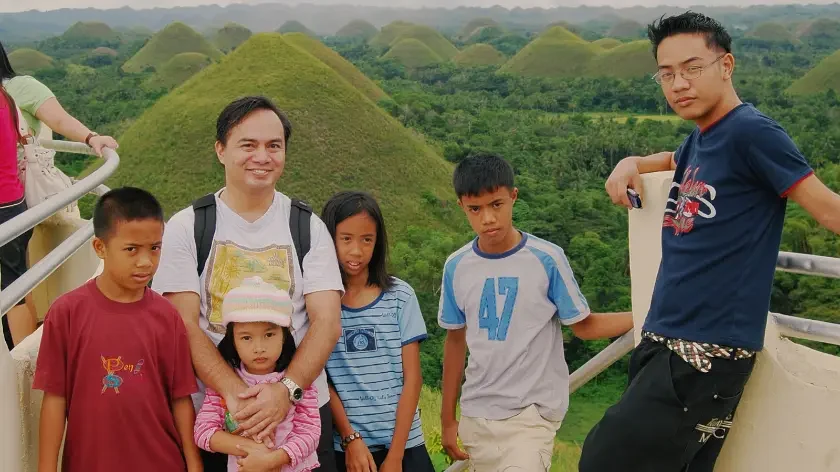
This is when the hills earn their name. From November through May, the landscape transitions to that famous chocolate-brown color as the limestone becomes exposed and the vegetation turns dormant. This is peak season for the iconic postcard images you’ve probably seen. The weather is dry, skies are clearer, and sunrise and sunset photography is generally spectacular. However, expect more tourists, especially during Holy Week (Semana Santa) when Filipinos travel locally. If you’re visiting then, arrive early—very early.
The Wet Season (June–October): Green and Less Crowded
Don’t skip the Chocolate Hills just because it’s wet season. When the southwest monsoon (habagat) arrives, these mounds turn impossibly green. The entire landscape transforms into layers of emerald. It’s dramatically beautiful in a different way, and you’ll share the viewing platforms with far fewer people. The rains come mostly in the afternoons, so mornings are usually clear. Bring an umbrella and waterproof shoes, but don’t let the season discourage you.
Year-Round Accessibility
Both viewing complexes are open and accessible every day. The road to Carmen is paved and manageable even during rainy season, though occasional landslides can briefly close the route up to Sagbayan Peak. Check locally before heading up, but day-to-day, the Chocolate Hills welcome visitors in any season.
How to Get to Chocolate Hills
You’re probably starting from either Tagbilaran (the capital, where the ferry arrives) or Panglao Island (where most tourist resorts are). I’ll give you the honest distances and options so you can choose what works for you.
From Tagbilaran Port
The drive from Tagbilaran to the main Chocolate Hills viewing complex in Carmen is approximately 50 kilometers. It takes 1 to 1.5 hours depending on traffic and road conditions. You’ll head northeast out of the city, moving away from the coast and into Bohol’s inland countryside. The road is paved, though some sections are narrower and windier as you climb.
From Panglao Island
If you’re staying at one of the resorts in Panglao (most visitors are), the distance is approximately 45 kilometers. You’ll cross the bridge linking Panglao to Tagbilaran, pass through the capital briefly, and then head inland. The journey takes about 1 hour, depending on Panglao traffic and your starting point.
Public Transport Option: The Carmen Bus
If you’re traveling independently and want to save money, Ceres Bus Terminal in Tagbilaran runs regular service to Carmen. Ask at your hotel or at the terminal for the Carmen-bound bus. The ride is authentic, cheap, and you’ll meet local travelers. From Carmen town proper, it’s a short tricycle ride (motorized taxi) to the viewing complex. This route requires patience and time, but it’s doable and genuinely affordable.
Private Tour Options
Most visitors book a private tour or join a group tour. These usually depart from Panglao or Tagbilaran and include hotel pickup, the entrance fee to the viewing complex, and sometimes a guide. Before booking, compare a private vs. shared Chocolate Hills tour to decide which format suits your group size and budget. For day tours from Panglao or combined countryside experiences, check best Bohol countryside tours on GetYourGuide for current options. They typically combine the hills with the Tarsier Sanctuary in Corella, Bilar Man-Made Forest, and a Loboc River lunch.
“We combined Chocolate Hills with the Tarsier Sanctuary and Loboc River—a perfect full day. Our kids loved seeing the tiny tarsiers, climbing the hills, and splashing in the river. Bohol really does deliver magic for families.”
— Sarah M., Manila ⭐⭐⭐⭐
My Honest Take
If you have limited time and want a hassle-free experience, book a tour. If you’re comfortable driving or hiring a private driver, that gives you flexibility. If you’re on a budget and have time, the bus is genuinely fine. I’ve done all three, and all three work.
Viewing Complexes — Complex 1 vs Complex 2
There are two main viewing areas, and they offer very different experiences. Most visitors go to Complex 1 (Carmen), but I want you to understand the difference so you can choose what matches your pace and interests.
Complex 1: Carmen (Main Viewing Platform)
This is the flagship. The entrance is easy to find, well-signed, and busy. You’ll climb 214 steps to reach the main viewing deck—sturdy wooden steps with railings. From the top, the view unfolds in front of you: wave after wave of mounds, the landscape rolling toward the horizon.
The complex includes:
- A lower viewing area (wheelchair-accessible, no steps required)
- The upper viewing deck reached by 214 steps
- Souvenir shops, small food stalls, and a restaurant
- Clean restrooms
- Parking for cars and tour buses
- A small museum with basic information
The steps are manageable for most people, though the last section is steeper. If you’re not physically fit, the lower viewing area still gives you a genuine sense of the landscape. On clear days, you can see across to Cebu Island in the distance.
Photography at sunrise (around 5:30–6:30 am during dry season) is stunning here. The light comes from behind the hills, silhouetting them and warming the sky. The downside? Everyone’s doing sunrise. You’ll be elbow-to-elbow with tour groups.
Complex 2: Batuan (The Quieter Option)
If you want fewer tourists and a more natural feel, Complex 2 in Batuan is worth the detour. The climb is steeper and more rugged—there’s less infrastructure and no big platforms. This is more hiking than sightseeing. The views are equally beautiful, arguably more intimate. You’re walking through the actual landscape rather than standing on a deck looking at it.
This complex appeals to:
- Photographers wanting less crowded shots
- Travelers who prefer a hiking experience
- People flexible on time and willing to explore
- Those seeking a more authentic, less touristy feel
The trade-off is accessibility. There’s less shade, fewer facilities, and the path requires decent fitness and proper footwear.
Sagbayan Peak
From the Carmen complex, a road continues upward to Sagbayan Peak (sometimes called Chocolate Hills View Point 3). The view from here is spectacular and awesome—you see the Chocolate Hills, the sea, and on clear days, the Island of Cebu. There’s a high-powered telescope here. Drop a 10-peso coin and you can view the Cebu City skyline. It’s a small detail, but it’s magical. Bring coins.
What to See Nearby
The Chocolate Hills are the centerpiece, but the surrounding countryside offers excellent complementary experiences. You can build a full day or multi-day trip by combining attractions.
Tarsier Sanctuary (Corella)
About 10 kilometers from the main Chocolate Hills complex, the Tarsier Sanctuary sits on 167 hectares of forest. Tarsiers are tiny, big-eyed primates—locals call them “mamag,” “mago,” or “maomag.” They’re endemic to the Philippines and seeing them is genuinely humbling. They’re small, almost otherworldly-looking, and they move with incredible agility through the trees.
Important: Flash photography and handling are not permitted. The sanctuary protects these creatures, and that’s the whole point of visiting. You’ll see them, photograph them respectfully, and understand why Boholanos treasure them as part of our natural heritage. Read the full Tarsier Sanctuary guide for entry logistics, best times to visit, and ethical viewing tips.
Bilar Man-Made Forest
The road from Tagbilaran through to the Loboc-Bilar area includes a stretch locals call the “tina-i sa manok” (chicken’s intestines)—a winding mountain road that hairpins up the hillside before you reach Bilar. When you get there, the man-made forest greets you: planted mahogany trees creating a green, cool tunnel. It’s peaceful and photogenic, a popular stop on countryside tours. See the Bilar Man-Made Forest guide for photography tips and walking routes through the forest.
Loboc River and Cruise
The Loboc River is about 30 minutes from the Chocolate Hills. You can take a river cruise, swim in designated spots, and enjoy the lush vegetation along the banks. Many tour packages combine Chocolate Hills + Loboc River lunch, which works beautifully for a full-day experience.
Baclayon Church
On the way back toward Panglao or Tagbilaran, stop in Baclayon to see the church—one of Bohol’s oldest structures. It’s heritage and architecture worth 20 minutes of your time.
Chocolate Hills Adventure Park
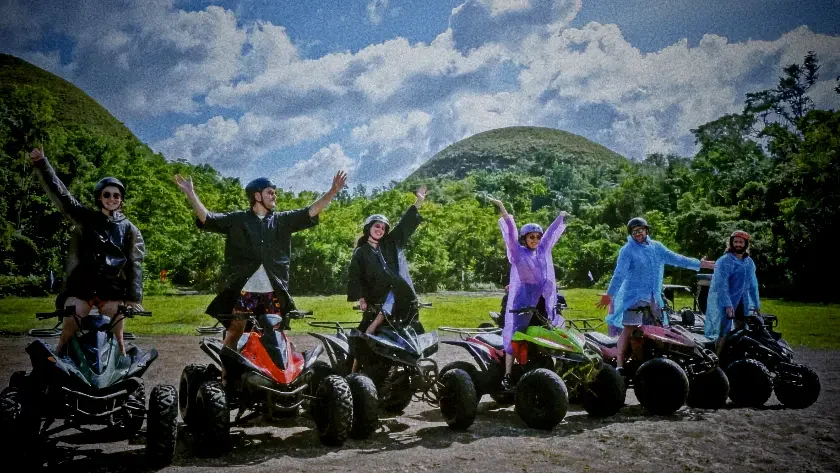
If you’re traveling with children or want an adrenaline component, this park near Carmen offers zip-lining and obstacle courses with views of the hills. It’s not essential to the Chocolate Hills experience, but some families love it. For ATV rides with views of the iconic mounds, check the Bohol ATV countryside tour for booking details.
Where to Stay for Chocolate Hills
Most visitors don’t stay overnight near the Chocolate Hills. Instead, they base themselves in larger towns nearby.
Carmen Town (Closest)
If you want to stay nearest to the hills, Carmen town has modest hotels and inns. Accommodations are basic but clean. You’d be 15–20 minutes from the main viewing complex. This works if you want to catch sunrise easily or explore at your own pace. Browse the Chocolate Hills accommodation guide for the best hotels and resorts in the Carmen area.
Panglao Island (Most Popular)
The vast majority of visitors stay in Panglao—particularly around Alona Beach. The Alona Beach guide has excellent beach resorts, restaurants, dive shops, and nightlife. You’re about 1 hour from Chocolate Hills, which makes it a comfortable day trip. Many tour operators pick up from Panglao hotels.
Tagbilaran City (Budget and Flexibility)
If you’re budget-conscious or want access to more dining and transport options, Tagbilaran works. You’re closest to the airport and ferry terminal, and the Chocolate Hills are still very accessible. Accommodations range from budget to upscale.
My Recommendation
Stay in Panglao Island if you want a full beach and island experience with the Chocolate Hills as a day trip. Stay in Tagbilaran if you’re maximizing logistics and flexibility. Choose Carmen only if the Chocolate Hills are your singular focus and you want zero commute.
Practical Visitor Information
Opening Hours
The Chocolate Hills viewing complexes are generally open from approximately 6:00 am to 5:00 pm daily. However, hours can shift seasonally or for local events. Always confirm with your hotel or tour operator before heading out, especially if you’re planning a very early sunrise visit or a sunset trip.
Entrance Fees
Expect to pay approximately ₱50–100 per person for entrance to either viewing complex. Prices may vary slightly. Most tour packages include this fee. If you’re going DIY, bring cash—not all locations accept cards. The money supports maintenance of the viewing areas and local employment.
Guides
Guides are available at both complexes. They’re optional but recommended if you want the stories and context. A guide will cost approximately ₱500–1,000 for a small group and will enrich your visit with local knowledge, legends, and photography tips. If you’re traveling independently, hiring a guide at the entrance is straightforward.
What to Bring
- Water: Carry at least 2 liters per person. The viewing platforms offer little shade and the sun is intense.
- Sunscreen: Essential. The reflection off the limestone is relentless.
- Good Shoes: Wear sturdy walking shoes with good grip. The steps are steep and can be slippery, especially after rain.
- Hat or Cap: Necessary for sun protection during the day.
- Light Jacket or Layer: Bring something warm for sunrise if you’re arriving at dawn. Morning mountain air can be cool.
- Insect Repellent: Mosquitoes are present, especially in wet season.
- Phone Charger: Bring a portable power bank so you don’t run out of battery photographing the hills.
Photography Tips
- Sunrise (5:30–6:30 am): Golden light, silhouettes, and fewer tourists early in the morning. Plan to be there before sunrise.
- Late Afternoon (4:00–5:00 pm): The light turns warm and golden as it approaches sunset. The hills glow.
- Noon Light: Harsh and flat. Less ideal for photography.
- Drone Photography: Check local regulations before flying a drone. Permits may be required.
- Portrait Shots: Use the mounds as a natural backdrop. They photograph beautifully with people in the foreground.
Tarsier Etiquette
If you visit the Tarsier Sanctuary, remember: no flash photography, no handling, no loud noises. These are wild creatures in a sanctuary setting. Respect them, and your experience will be meaningful rather than stressful.
Frequently Asked Questions
1. What are the Chocolate Hills of Bohol?
The Chocolate Hills are a geological formation consisting of 1,268 limestone mounds spread across approximately 50 square kilometers in central Bohol. They formed over millions of years as water erosion carved limestone (a soft, soluble rock) into these distinctive cone-shaped peaks, typically 30–50 meters tall. The name comes from their chocolate-brown color during the dry season when vegetation recedes and limestone is exposed. They’re one of the Philippines’ most iconic natural landmarks and listed on the UNESCO World Heritage tentative list as a site of outstanding geological and cultural value. The hills are deeply cultural — Boholano folklore, legends passed down for generations, and a source of pride for local communities.
2. Why are they called Chocolate Hills?
The name comes from their appearance during the dry season (November–May), when the vegetation on the limestone mounds turns brown and dormant, making them look like chocolate kisses or cocoa-colored humps dotting the landscape. From a distance, the resemblance is striking. During the wet season (June–October), they turn green, but the “Chocolate Hills” name has stuck and is now permanent. Locals have been calling them this for decades, and the name has become inseparable from Bohol’s identity.
3. What’s the best time to visit the Chocolate Hills?
The dry season (November–May) is peak time: clear skies, brown coloring, and iconic photography conditions. However, expect larger crowds, especially Holy Week. The wet season (June–October) offers lush, emerald-green hills, fewer tourists, and lower prices, though afternoon rains are common. Both seasons are beautiful; choose based on your preferences for weather, crowds, and photography. Year-round, the hills are accessible and worth visiting.
4. How do I get to Chocolate Hills from Tagbilaran?
From Tagbilaran Port, it’s approximately 50 kilometers and 1–1.5 hours by car heading northeast into central Bohol. Public transport includes the Carmen bus from Ceres Bus Terminal (cheap, requires patience). Alternatively, book a private tour (most convenient), hire a private driver, or rent a motorcycle or scooter if you’re comfortable driving. Most visitors choose a tour for simplicity.
5. Is there an entrance fee? What are the hours?
Yes, expect approximately ₱50–100 per person. The complexes are generally open 6:00 am to 5:00 pm daily, but confirm locally as hours vary seasonally. Most tour packages include the entrance fee. Bring cash—not all locations accept cards. The fee supports maintenance and local employment.
6. Can I visit Chocolate Hills if I’m not physically fit?
Yes. Complex 1 (Carmen) has a lower viewing area requiring no steps—you still get genuine views of the landscape. If you want the main viewing deck, 214 steps are involved, but they have railings and are manageable for most people. Complex 2 (Batuan) is more hiking-intensive and better suits those with good fitness. Take your pace, rest as needed, and bring water. Fitness is a factor, but the hills are accessible to most visitors.
7. Should I book a private tour or go DIY?
Book a tour if you prefer convenience, include multiple attractions, lack confidence driving unfamiliar roads, or want local insights. Go DIY if you’re comfortable driving (or hiring a driver), want flexibility, and enjoy exploring independently. Both work. Tours typically cost ₱1,500–3,500 per person depending on inclusions. See the private vs. shared Chocolate Hills tour comparison for a detailed breakdown.
8. What attractions are near the Chocolate Hills?
The Tarsier Sanctuary (10 km away, 167 hectares of forest with endemic primates), Bilar Man-Made Forest (winding mountain road and planted mahogany forest), Loboc River cruises and lunch (30 minutes away, scenic and relaxing), Baclayon Church (historic architecture on the way back), and Chocolate Hills Adventure Park (zip-lining and obstacles for families). Many tours combine 2–3 of these with the hills for a full-day experience.
9. How long should I spend at Chocolate Hills?
Plan 2–3 hours minimum: 30 minutes for the drive, 1.5–2 hours exploring the viewing complex, and 30 minutes back. If you’re hiking or visiting multiple viewpoints, add more time. If combining with nearby attractions (Tarsiers, Bilar, Loboc), plan a full 6–8 hour day trip. If visiting overnight or exploring extensively, 1–2 days in the area is rewarding.
10. Can I see Chocolate Hills at sunrise or sunset?
Absolutely. Sunrise (5:30–6:30 am) is the most popular time for photography—golden light, silhouettes, and fewer initial crowds. Arrive early; you’ll still see other photographers, but the light is worth it. Sunset (4:00–5:00 pm) is quieter and equally beautiful, with warm, glowing light. Both require early or late transportation from your base (Panglao, Tagbilaran, or Carmen).
Exploring the Region: Related Resources
The Chocolate Hills are best explored within the broader context of Bohol’s countryside and island experience. Here are guides to help you plan:
Bohol travel guide covers the entire island—where to stay, how to move around, and what makes Bohol special beyond the famous hills.
Things to do in Bohol offers a comprehensive list of attractions island-wide, so you can layer in activities beyond the hills.
Bohol tours helps you find guided experiences, from countryside tours to island hopping.
Bohol transport guide explains buses, ferries, and how to move between towns and islands.
If you’re combining Bohol with other islands, check Bohol day tours and Cebu hotels guide for multi-island options.
For specific interest areas:
- Best Bohol countryside tours on GetYourGuide curates highly-rated countryside experiences
- Best Mirror of the World tours Bohol highlights another stunning natural attraction
- Bohol birdwatching guide for natural history enthusiasts
The Connection Between Chocolate Hills and Your Bohol Journey
The Chocolate Hills aren’t just a photo op or a checkbox on a tourism list. They’re a window into Bohol’s identity—our geology, our mythology, our pride in place. My mother used to say they reminded us that beauty often comes from ancient struggles, whether the quarrels of giants or the slow patience of water carving stone.
When you visit, you’re not just sightseeing. You’re standing on the edge of stories that have defined an island. You’re witnessing a landscape shaped by millions of years and millions of minds.
Start your planning with the Bohol travel guide to understand the broader island, then circle back to the hills. They’ll be waiting, brown and beautiful in the dry season or lush and green when the rains arrive.
See you there.
Ready to explore Bohol beyond the hills?
Start with the Panglao Island guide if you’re looking for beach accommodations, Tagbilaran City guide for urban amenities, or Loboc travel guide for riverside charm and river adventures.