
Panglao Island, Bohol
Beach Resorts, Diving & Island-Hopping Guide 2026
Panglao Island is where you come when you want Bohol’s beaches without the compromise. It’s close enough to reach from mainland Bohol in under an hour, but far enough to feel like its own world. White sand beaches, coral reefs that rival anywhere in the Philippines, and island-hopping routes that rival anywhere globally — it’s all here.
The island itself is only 91.12 square kilometers, but it punches far above its weight. Local families have been living here for centuries, diving for fish and weathering typhoons. You’ll arrive as a visitor but leave knowing why people stay.
Where Is Panglao Island?
Panglao Island sits just southwest of Tagbilaran, Bohol’s main coastal city, separated by two bridges that connect it to the mainland. The island belongs to two municipalities: Panglao (the western half) and Dauis (the eastern half), with a combined population of roughly 100,000 people. The landscape is low and gentle — no mountains like the interior, no dramatic cliffs on all sides. Roads wind through villages where you’ll see tricycles, family eateries, and old churches weathered by salt air.
The island has ancient roots. Archaeological digs have uncovered Tang, Sung, and Ming dynasty porcelain — evidence of trade with Chinese merchants centuries before the Spanish arrived, as documented in the collections of the National Museum of the Philippines. When Spain colonized the Philippines, they renamed the island “Panglao,” likely a Spanish mishearing of the original “Panggaw,” the name that evolved through a series of linguistic misunderstandings during the Spanish colonial period when Spaniards came searching for fresh water. Today that same fresh water still exists in springs and wells scattered across the island.
From Tagbilaran city center, the drive to Alona Beach (Panglao’s flagship beach) takes about 45 to 60 minutes depending on traffic. If you’re coming from Cebu City, take the ferry to Tagbilaran (approximately 2 hours), then drive across. It’s a manageable journey that most families undertake without stress.

Top Beaches on Panglao
Alona Beach is the signature beach. Located at the southwestern tip in Tawala barangay, it stretches a clean one and a half kilometers of coral white sand, ending in rocky cliffs at both sides. The water here is bathwater-warm most of the year, and the reef is close enough to snorkel from shore. This is where you’ll find the island’s main cluster of resorts and dive shops, making it the logical base if you’re new to Panglao. It’s busy on weekends and holidays, quiet on Tuesday mornings.
See more in the Alona Beach guide.
Biking Beach (also called Banica Beach) sits on the northwestern side, quieter than Alona and popular with local families. The sand is finer here and the water slightly calmer. A few smaller resorts operate here, and it’s a good choice if you want beach time without the dive shop crowds.
Danao Beach lies on the southwestern shore between Alona and the rocky point. It’s rockier than Alona but less developed, with just a handful of small eateries. Locals fish here early morning. The water clarity rivals Alona, and you’ll see fewer tourists.
Libaong Beach stretches along the southeastern coast, known for calm waters and a family feel. It’s a popular spot for sunset, and the sand is wider than many realize.
For detailed reviews and practical logistics, see the Alona Beach guide again. Most visitors base themselves in Alona and explore the others as day trips via tricycle.
Diving and Snorkeling at Panglao
Panglao holds a marine biodiversity record that deserves repeating: the island alone has more marine biodiversity than Japan and the Mediterranean Sea combined, according to marine surveys conducted in the Coral Triangle region and documented by the DENR Protected Areas and Wildlife Bureau. That’s not marketing hyperbole — it’s rooted in the coral triangle’s ecosystem and the narrow shelf that creates nutrient-rich upwelling.
“As a recreational diver, the dive operators on Alona Beach made me feel comfortable and safe. The Balicasag dives were stunning — caves, schools of jacks, and visibility that made you feel like flying. Best diving value I’ve found in the Philippines.” — James R., Sydney ⭐⭐⭐⭐⭐
Balicasag Island Marine Sanctuary is the marquee dive site. Located 6.5 kilometers southwest of Panglao, this 25-hectare marine protected area features a 400-meter sanctuary with vertical walls and cathedral-like cave formations. The Cathedral Wall glows on sunny days when light filters through the cave mouths. Visibility typically runs 15 to 25 meters. You’ll see schooling jacks, snappers, sweetlips, and if you’re lucky, reef sharks in the deeper sections. Most dives here suit intermediate and advanced divers, though shallow reef dives work for beginners.
Pamilacan Island, further to the east, is famous for dolphin watching and reef diving. The name comes from “pamilac,” the Cebuano word for harpoon. Local boat operators depart early morning (around 5:30 a.m.) to spot spinner dolphins. Dives on the reef here are slightly less challenging than Balicasag, with abundant soft corals and cleaner visibility on calmer days.
Alona Beach is home to five or six dive shops, all PADI-certified and familiar with the routes. Expect to pay 2,500 to 3,500 PHP (45–65 USD) for a two-tank dive, including equipment. Snorkeling day trips to Balicasag or Pamilacan cost around 1,500 to 2,000 PHP (27–36 USD) per person.
Island-Hopping Day Trips
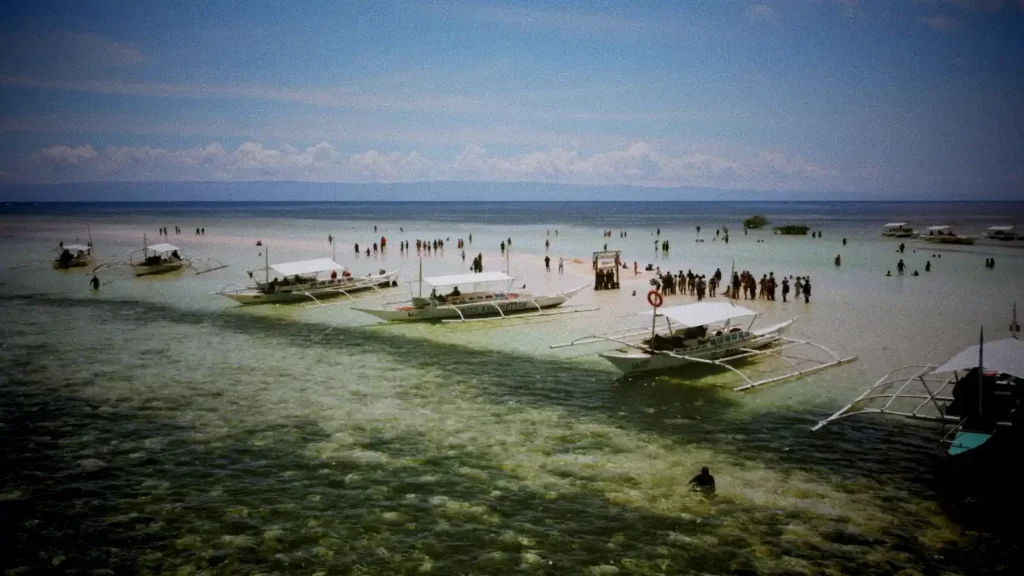
Beyond diving, Panglao serves as a hub for island-hopping adventures. Use the island-hopping tours from Panglao guide to compare routes, operators, and seasonal conditions across all departure points.
“We did a half-day island-hopping tour to Balicasag and Virgin Island sandbar. The guides knew the reefs inside out, the snorkeling spots were well-chosen, and the boat crew looked after our kids the whole time. Panglao feels like it was built for families.” — Sophia M., Bangkok ⭐⭐⭐⭐
Balicasag Island is the closest major island, just 30 to 40 minutes by boat from Alona. Most tours include two hours of snorkeling, time to walk the island’s small village, and sometimes a beachside lunch. Bring reef shoes — the boat landing involves shallow coral flats. Book a Balicasag Island snorkeling tour in advance during December–April peak season.
Pamilacan Island dolphin tours depart early (5:30–6:00 a.m.) and return by noon. Spinner dolphins are reliably spotted in the deeper waters off the island. After dolphin watching, the boat usually stops for snorkeling on the reef. These trips suit families with children and non-divers.
Virgin Island Sandbar sits east of Pamilacan — a narrow sandbar that appears and disappears with tides. Tours typically include snorkeling en route, lunch on the sandbar, and swimming. It’s a classic Instagram-friendly experience and worth the half-day commitment.
Limestone Caves at Hinagdanan and other locations dot the area. Some are accessible by boat tours that include snorkeling stops nearby.
Most island-hopping tours run 4 to 6 hours and cost 1,200 to 2,500 PHP (22–45 USD) per person, depending on group size and how far you go. Boats depart from Alona Beach hotels and from independent boat operators near the pier.
“We booked a beachfront bungalow in Alona for five nights and never wanted to leave. The snorkeling was incredible, the food was fresh, and the staff felt like family by day three. Panglao delivers exactly what you want from a Philippine beach island.” — Maria C., Manila ⭐⭐⭐⭐⭐
Resorts and Accommodation on Panglao
Budget resorts (500–1,500 PHP or 9–27 USD per night) cluster around Alona Beach and scattered on other shores. Many are family-run, with fan rooms, basic bathrooms, and a restaurant downstairs. They’re clean, reliable, and often sit right on the beach. Browse Panglao beach hostels for the best budget options and hostel dorms on the island.
Mid-range resorts (1,500–4,000 PHP or 27–72 USD) offer air conditioning, private bathrooms, small pools, and dive shop partnerships. Some have restaurants and activity desks on-site. Families typically book here — it’s the comfort zone without the luxury price. See family-friendly Panglao resorts for a curated list of the best family-oriented options.
Boutique resorts (4,000+ PHP or 72+ USD) occupy prime beachfront or hilltop positions, featuring private villas, spa services, and curated dining. They attract couples and travelers seeking solitude. The Panglao luxury resorts guide covers the island’s top-tier beachfront properties.
Panglao hosts Hudyaka sa Panglao in August, the island’s main festival. “Hudyaka” means merriment or jubilation in the local dialect. During this week, resorts book months ahead, and prices rise 20–30%. If you’re visiting in August, book your accommodation three to six months in advance.
For a full cross-provincial comparison, see the Bohol hotels guide.
How to Get to Panglao Island
From Cebu City:
- Take the ferry from Cebu North Harbor or South Harbor to Tagbilaran. Journey time: approximately 2 hours. Ferries run multiple times daily (Ceres Lines, Bohol Strait Shipping). Cost: 200–400 PHP (4–7 USD) per person.
- From Tagbilaran, rent a vehicle or take a van/bus heading toward Panglao. Distance: 35–40 km. Time: 45–60 minutes. Cost: 100–300 PHP (2–5 USD) depending on vehicle type.
- See the Cebu to Bohol ferry guide for detailed schedules.
From Tagbilaran (Bohol mainland):
- Two bridges connect Panglao to the mainland. The Tagbilaran Bridge is the primary route. Drive south toward Tagbilaran city center, then follow signs toward Panglao.
- Distance from Tagbilaran city center: 35–40 km.
- Time: 45–60 minutes by car, longer by public van.
- Cost by van: 50–100 PHP (1–2 USD) per person.
- See the Bohol transport guide for rental car and van options.
Driving within Bohol:
If you’re exploring the interior (Chocolate Hills, Loboc River, countryside tours), Panglao makes sense as a multi-day base before or after exploring the center. Drive time from Chocolate Hills visitor center to Alona Beach: approximately 90 minutes.
Most travelers combine Panglao with other Bohol destinations. See the Bohol travel guide for regional logistics.
Practical Tips for Visiting Panglao Island
Best time to visit: November through May (amihan or dry season). Rainfall is minimal, seas are calm, and visibility for diving is excellent. July–October is the rainy season; seas can be rough, limiting boat activities. Book accommodations three to six months ahead for December through March and Holy Week (March–April).
Holy Week timing: Holy Week is the busiest travel period in the Philippines. Panglao’s beaches and resorts fill to capacity. If you’re visiting during this window, book six months in advance or expect limited options and higher prices. Many families use Holy Week as their beach escape.
What to pack:
- Reef-safe sunscreen (many resorts require it to protect the marine sanctuary).
- Reef shoes or water booties.
- Light, breathable clothing.
- A waterproof phone case.
- Antihistamine cream (for sea urchin stings, though rare).
- A light sarong or rash guard for beach cover-ups and sun protection.
- Insect repellent (mosquitoes are present but dengue risk is low on the island).
Safety: Panglao is one of Bohol’s safest tourist destinations. Petty theft happens in crowded areas, so leave valuables in your resort safe. Swimming is safe along main beaches; strong currents are rare. The coral can be sharp — reef shoes protect your feet and the reef itself. Diving should only be done with certified operators.
Currency and costs: The Philippine Peso (PHP) is the currency. Most resorts, restaurants, and dive shops accept cash and cards. ATMs are available on Alona Beach. Budget daily: 1,500–2,500 PHP (27–45 USD) for budget accommodation, meals, and activities. Mid-range travelers spend 3,000–6,000 PHP (55–110 USD) daily.
Food: Local eateries serve fresh fish, grilled seafood, and rice-based meals. Try grilled tilapia, kinilaw (ceviche-style fish), and fried lumpia (spring rolls). Most beach resorts have restaurants; venturing into nearby villages opens cheaper, family-run options.
Connectivity: Mobile networks (Smart, Globe) have good coverage. Resorts offer WiFi, though speeds vary. Power outages are rare but can happen during storms.
For more on Bohol logistics, see things to do in Bohol, best Bohol countryside tours, and the Chocolate Hills guide.
Plan Your Panglao Island Trip
A three-day trip is ideal for first-timers: Day 1 arrives mid-afternoon, settles into your resort, and explores Alona Beach at sunset. Day 2 is a full-day island-hopping or diving adventure (Balicasag, Pamilacan, or both). Day 3 includes a morning snorkel or beach time, lunch, and departure. Families often extend to four or five days, adding a trip to nearby Bohol attractions.
Consider combining Panglao with the Loboc travel guide (Loboc River cruises) or the Bohol birdwatching guide if you have a week. The Bohol travel guide offers itineraries that weave multiple destinations together.
Panglao isn’t just a beach destination — it’s a window into how Bohol’s people live alongside the sea, how villages have evolved alongside tourism, and how a small island can hold an outsized share of the planet’s marine wealth. Come for the diving and the sand. Stay because the pace makes sense and the people make you welcome.
Frequently Asked Questions — Panglao Island, Bohol
Is Panglao Island worth visiting?
Absolutely. Panglao is Bohol’s primary beach destination — a 91.12 km² island with white-sand beaches, diving that rivals anywhere in the Philippines, and island-hopping routes to Balicasag and Pamilacan. The marine biodiversity here is among the richest in Southeast Asia. It’s worth three to five days as part of a broader Bohol trip, or as a standalone beach base if you’re crossing from Cebu. The variety of accommodation — from budget guesthouses to boutique resorts — means it works for almost any travel style or budget.
What’s the best time to visit Panglao?
November through May is the dry season (amihan): calm seas, clear skies, and excellent diving visibility — the ideal window for beach time and water activities. December through March is the peak period; book ahead. Holy Week in March or April is the busiest stretch of the year — resorts fill up six months in advance. August brings the local Hudyaka festival. June through October is rainy season, when seas are rougher and boat trips less predictable, though accommodation rates drop noticeably and crowds thin out.
How do I get to Panglao Island from Bohol mainland?
Two bridges link Panglao to Tagbilaran on the mainland. From Tagbilaran city centre, Alona Beach is 35–40 km — about forty-five to sixty minutes by car or van (₱100–300). If arriving from Cebu, take the ferry to Tagbilaran (about two hours, multiple daily departures), then drive south to Panglao. For complete ferry schedules and operators, see our Cebu to Bohol ferry guide. Most resorts can arrange airport or port transfers if you prefer a hassle-free arrival.
What are the best beaches on Panglao?
Alona Beach is the flagship — 1.5 km of coral-white sand on the southwestern tip, with reef snorkeling accessible from shore and fifteen or so dive shops within walking distance. Biking Beach (Banica) on the northwest is quieter and popular with families. Danao Beach is less developed, with excellent water clarity and local fishing boats heading out early morning. Libaong Beach along the southeast coast offers calm water and wide sand — good for children. Most visitors base at Alona Beach and explore the others by tricycle.
Is Panglao Island good for diving?
Yes — Panglao has a marine biodiversity record that holds up to scrutiny: more species in the surrounding waters than the Mediterranean and Japan combined. The marquee site is Balicasag Marine Sanctuary (6.5 km southwest), a 25-hectare protected area with vertical walls, cathedral cave formations, and visibility of 15–25 metres. Pamilacan Island adds reef diving and dolphin watching. PADI-certified dive shops on Alona Beach offer two-tank dives for ₱2,500–3,500. Conditions suit all levels from beginner to advanced. For dive packages and current operators, see our Bohol tours guide.
Can I do a day trip to Panglao from Tagbilaran?
Yes. Tagbilaran to Alona Beach is about forty-five to sixty minutes by road, so a day trip is entirely feasible — swim, snorkel, have lunch on the beach, and return in the evening. That said, an overnight stay (ideally two or three nights) makes more sense. It lets you catch early morning island-hopping boats, enjoy a relaxed sunset dinner, and feel settled rather than rushed. Day trips work best if you’re already based in Tagbilaran and just want a taste of the beach before moving on.
How much does a beach resort on Panglao cost?
Budget dorm beds and basic fan rooms start at ₱500–1,200 per night. Mid-range air-conditioned rooms with pools run ₱1,500–4,000. Boutique beachfront resorts charge ₱4,000–10,000+. Prices rise 20–30% during peak season (December–March) and Holy Week — book three to six months ahead for those periods. Rainy season (June–October) offers the best rates. For a full comparison of options from hostels to luxury villas across Panglao and wider Bohol, see our Bohol hotels guide.
What water sports are available on Panglao Island?
Diving and snorkeling are the big draws, but the list goes further: island-hopping tours to Balicasag and Pamilacan (₱1,200–2,500 per person), dolphin watching (early morning, dry season), kayaking, stand-up paddleboarding, and boat fishing. Most resorts on Alona Beach can arrange any of these within a few hours. Private boat charters for a custom island-hopping day run ₱3,000–6,000. Children can join most snorkeling and dolphin tours. Equipment rental — masks, fins, life jackets — is widely available at reasonable rates.
Is it safe to visit Panglao Island?
Yes. Panglao has a strong safety record for tourists. Petty theft can occur in busy areas (keep valuables in your resort safe, don’t leave phones on beach chairs), but violent crime is rare. Swimming is safe along the main beaches; check for rip current warnings with your resort after rain. Diving safety is high with certified operators — follow their briefings. Medical facilities on Panglao are basic; serious emergencies require transport to Tagbilaran or Cebu. Travel insurance covering medical evacuation is recommended.
How many days should I spend on Panglao?
Three days is the sweet spot for first-time visitors: Day 1 to settle in and explore Alona Beach; Day 2 for a full island-hopping or diving day (Balicasag, Pamilacan, or both); Day 3 for a morning snorkel or leisurely beach time before departure. Families and divers often extend to four or five days. If you’re combining Panglao with mainland Bohol — the Chocolate Hills, Loboc River, and the countryside — a week gives you time to do both without rushing.
What’s the difference between Panglao Island and Alona Beach?
Panglao Island is the whole island — 91.12 km² with multiple beaches, two municipalities, and the international airport on its western shore. Alona Beach is one specific beach on Panglao’s southwestern tip: 1.5 km of white sand that’s become the tourist hub of the island, with the highest concentration of resorts, dive shops, and restaurants. When people say they’re “going to Panglao,” they almost always mean they’re staying near Alona. Other beaches on the island (Biking, Danao, Libaong) are quieter and less commercial.
When is the Hudyaka festival on Panglao?
Hudyaka sa Panglao is the island’s major annual festival, held in August. “Hudyaka” means merriment or jubilation in the local dialect, and the celebration features street parades, cultural performances, live music, and a general feeling of community festivity. If you plan to visit during August, book accommodation three to six months ahead — the island fills up. For those who want to experience authentic Bohol culture alongside beach time, timing your trip around Hudyaka adds a memorable dimension.
Have more questions about travelling to Bohol? Visit our complete Bohol FAQ for answers to the most common questions travellers ask.
More Bohol Resources:
Explore the Bohol travel guide for a full overview of the island. Check out the Cebu hotels guide if you’re combining both islands. For tours and activities across Bohol, see Bohol tours.