Balicasag Island Bohol: The Complete Guide to Sea Turtles, Dive Sites & Getting There
The boat leaves Alona Beach while the sky is still a deep violet-blue, the crew passing thermoses of coffee before the engines start. Thirty-five minutes later, as the sun climbs over Panglao, Balicasag Island Bohol rises from the sea — a small, dark-edged circle of land surrounded by one of the most intact coral reef systems in the Visayas. You drop your mask into the water before you’ve even finished strapping on your fins.
Then you see it: a green sea turtle, unhurried and enormous, drifting just below the surface of the sea grass bed, wings tilting slowly against a current you can barely feel. She doesn’t look at you. She doesn’t need to. She’s been doing this long before the banca boats arrived.
This is what Balicasag Island Bohol is — a 25-hectare marine sanctuary sitting 6.5 kilometers southwest of Panglao that consistently delivers encounters no brochure can oversell. Whether you dive or snorkel, whether you come for a group day tour or charter a private boat, Balicasag rewards the effort it takes to get here.
This guide covers exactly how to get there, what it costs, how to book a regulated dive slot, and the practical details that make the difference between a crowded trip and a genuinely memorable day on the water.
🔗 Book your Balicasag turtle snorkeling tour with instant confirmation → Book your Balicasag turtle snorkeling tour on GetYourGuide
🔗 Compare Panglao island hopping packages and reserve your spot → Book the Bohol Boat Tour — Turtle Sanctuary & Snorkel on Klook
Support this site by booking through our affiliate links — you pay the same price and help us keep this guide updated for travelers visiting Bohol.
Where Is Balicasag Island?
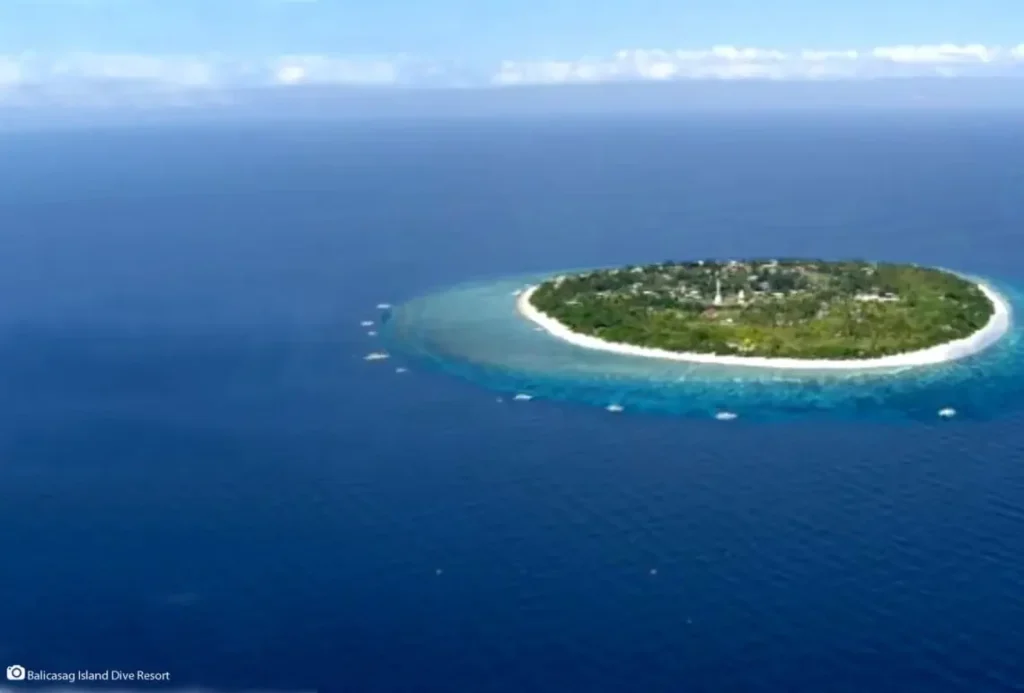
Balicasag sits in the Bohol Sea, 6.5 kilometers southwest of Panglao Island’s southwestern shore — roughly equidistant from Alona Beach and Dumaluan Beach. The island itself is compact at just 25 hectares, and its most important geography is mostly underwater: a fringing reef shelf that rings the entire island and terminates in perpendicular drop-offs plunging beyond 83 meters on the northern and northwestern faces.
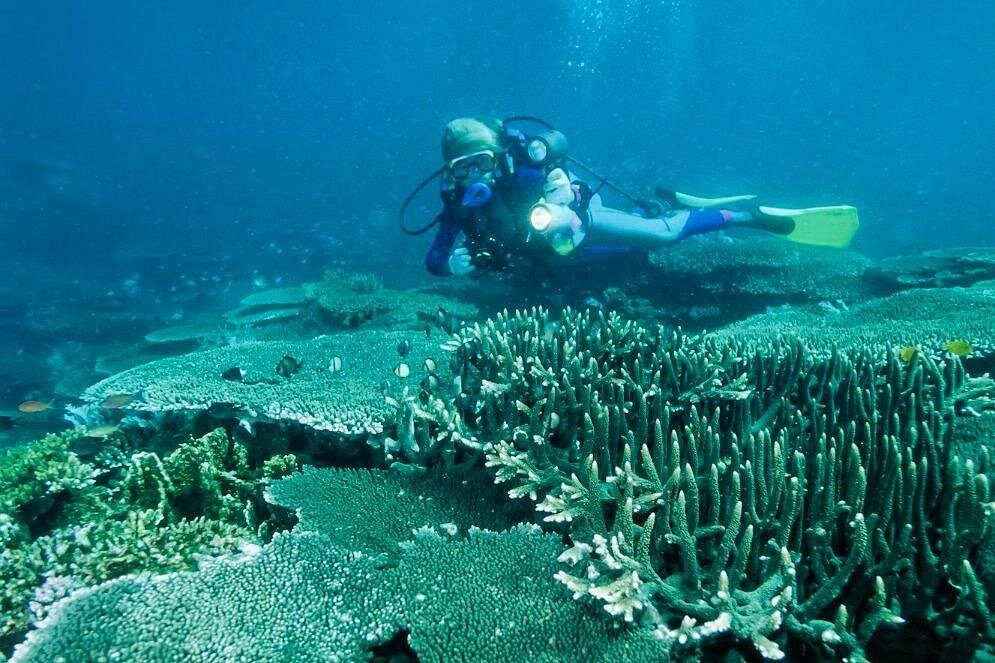
That ring of reef is what makes Balicasag exceptional. The shelf is between 3 and 8 meters deep — shallow enough to snorkel without equipment — before it falls away into open ocean. The top of the submarine cliffs is blanketed in hard coral; the deeper levels in sponges and gorgonians. A Marine Sanctuary occupies part of the reef, patrolled by local guides assigned specifically to the snorkeling zone. The rest of the island’s circumference is carved into named dive sites, each with its own character.
Panglao — the island from which most Balicasag trips depart — has been noted to hold more marine biodiversity than Japan and the Mediterranean Sea combined. Balicasag is where that claim is easiest to believe.
Two Zones, Two Experiences
Balicasag divides cleanly into two areas. Snorkelers enter the Marine Sanctuary, a protected zone with sea grass beds in 2–6 meters of water. Your banca anchors offshore, and a community-hired paddle boat ferries you the final stretch to the sanctuary entrance.
The guides who operate that paddle boat are islanders — men and women whose families have worked this reef for generations. Engaging them is not optional (it is required by the community management system), but it’s also a small, direct way to support the people who have kept this reef intact. That’s worth a moment of appreciation before you slip into the water.
Divers are dispatched to named sites circling the island, each site requiring booking through an accredited dive shop. Diver numbers at Balicasag are hard-capped at 150 per day — strictly enforced — so advance planning is essential.
The Snorkeling Zone: Sea Turtles at the Marine Sanctuary
The green sea turtles (Chelonia mydas) that feed in Balicasag’s sea grass beds are the island’s most celebrated residents. Unlike encounters elsewhere in the Philippines where turtles are seasonal or difficult to find, Balicasag’s turtles are resident year-round, grazing in shallow enough water that even a basic mask gives you a clear view from the surface.
Sightings are near-guaranteed during the dry season amihan months (November through May), when visibility can exceed 20 meters. The turtles do not need to be searched for. On most visits, they appear within minutes — circling slowly beneath the boat before heading back to the reef edge.
“I honestly wasn’t sure what to expect — I’ve been disappointed before with wildlife tours. But we had four turtles at once, close enough to watch their eyes move. It’s one of the best wildlife experiences I’ve had anywhere in Southeast Asia.”
— Clara M., Singapore ⭐⭐⭐⭐⭐
Beyond the turtles, the Marine Sanctuary holds dense coral formations, anemones with resident clownfish, lionfish resting on outcrops, and a variety of reef fish in water shallow enough to stand in. If you only snorkel and never dive, Balicasag still fully justifies the boat ride.
The no-touch rule is absolute. Touching turtles or standing on corals results in fines enforced by island guides. There is no grey area here, and it is part of why the marine life at Balicasag remains as rich as it does.
Top marine and island adventures in Bohol
The Dive Sites: What Each One Offers
Black Forest (Black Coral Forest)
At the northern tip of Balicasag, the Black Forest is the island’s most distinctive dive. A dense congregation of black coral trees grows at around 30 meters depth — surprising because black corals typically form below 50 meters. The prevailing explanation: the island’s shadow and the cool, nutrient-rich upwellings create deep-water conditions in surprisingly shallow terrain, and the corals responded as if they were further down.
The coral trees are spaced wide enough to fin through, and the main spectacle arrives in the water above them: Bigeye Trevally (jackfish) in tornado formations — thousands of fish spiraling in the current in a column that can stretch from 20 meters up to the surface. If you’ve only ever seen jackfish in small groups, this will recalibrate your sense of scale.
Best dived during slack tide. If you miss the window, the current at Black Forest can run strongly — your dive shop should be able to tell you the expected tidal conditions for your dive day.
Cathedral Wall
On the southwestern side of the island, Cathedral Wall is a long, craggy drop-off interrupted by caves and crevices. A torch is needed to illuminate the caves and the activities of reef fish darting between coral and sponge in the darker recesses. On clear, sunny days, light refracts into the shallower openings and creates columns of illumination inside the caves — an effect described by the island’s divers as awe-inspiring, and one that rewards time and patience from photographers.
Schools of big jacks idle along the current here, and macro photographers will find the crevices along Cathedral Wall the highest-yield spot on the island: nudibranches, Spanish dancers, and scorpionfish are regulars.
Turtle Point
On the eastern side of the island, Turtle Point drops to 20–25 meters where turtles rest inside caves in the reef wall. Unlike the Sanctuary snorkeling zone, where turtles move freely in the open water, Turtle Point requires patience — positioning near the cave mouths and waiting for the turtles to emerge or return.
While waiting, cushion stars and feather stars populate the surrounding walls, and triggerfish, mackerel, and lionfish fill the water column above. In the shallower approaches, anemones proliferate with their resident clownfish.
The Cavern
A few hundred meters northeast of the island’s small resort, The Cavern is a set of small cave openings on the drop-off wall at 20–25 meters. The dive is rewarding at any time, but the single best window is just before sunset — the transition period when daytime organisms retreat to shelter and nocturnal feeders emerge, all sharing the same water simultaneously. It is one of the few dive sites in Bohol where you can witness two ecosystems changing shifts.
Resort Wall
Directly in front of the island’s small resort, the Resort Wall is a good entry-level dive or a productive second dive when bottom time is running short. Sea fans are superb here; lionfish and scorpionfish are common. Current runs slightly stronger than elsewhere around the island — check conditions before descending.
“We did Cathedral Wall in the morning and the Black Forest before lunch. Both were completely different — it felt like diving two different oceans on the same day.”
— James K., Melbourne ⭐⭐⭐⭐⭐
Getting to Balicasag: Group Tour vs. Private Boat
The standard departure point is Alona Beach on Panglao Island — Alona Beach guide Bohol’s main island tourism hub, with more than 15 dive shops and around 30 resorts fronting a 1.5-kilometer stretch of coral sand. Dumaluan Beach is an alternative departure point, though most organized tours operate through Alona.
The crossing takes 30–45 minutes by motorized outrigger banca. Standard group tours typically include a dolphin-watching pass through the Pamilacan Channel on the way out — a stretch of open water where spinner dolphins are reliably spotted in the early morning. The former whale hunters of Pamilacan Island, who now serve as the region’s marine wildlife guides, have an almost uncanny ability to find dolphins without GPS equipment.
Pamilacan Island dolphin watching guide
Group Tour
- Cost: ₱700–₱1,200 per person
- Departure: ~6:00 AM from Alona Beach
- Includes: dolphin watching in Pamilacan Channel + Balicasag snorkeling
- Additional fees: environmental and sanctuary guide fees of ₱250–₱300 per person (sometimes included, sometimes not — confirm when booking)
- Schedule: fixed; you move with the group
- Best for: solo travelers, budget-conscious visitors, those who want the logistics handled
Private Boat
- Cost: ₱4,000–₱5,000 for a group of 4–6 people
- Flexibility: choose your own departure time, spend longer at sites that interest you, request specific stops
- Recommended for: underwater photographers needing extended time at specific dive sites, families with children, groups of 4+ (per-head cost equals or beats group pricing)
- Insider move: ask your boatman about a Virgin Island sandbar stop and negotiate it into the charter upfront. Arriving before 9:00 AM means you get the sandbar before tour groups land.
🔗 Book your Balicasag tour with GetYourGuide — instant confirmation → [GetYourGuide — Balicasag Island Hopping]
🔗 Find the best-value Panglao day tour on Klook → [Klook — Balicasag + Virgin Island]
Best Bohol island hopping tours
Booking Your Dive: Regulations & How to Plan
The 150-Diver Daily Limit
Balicasag’s dive sites operate under a hard cap of 150 divers per day, monitored by the island’s local dive officer. This quota fills during peak season (December to April) and on holiday weekends in the Philippines. Walk-in divers who arrive without a confirmed slot are turned away once the quota is met.
Book through an accredited dive shop 2–4 weeks in advance for peak-season visits. The dive shop handles your quota registration as part of the booking process. When confirming, ask specifically: “Is my dive day confirmed within the Balicasag 150-diver quota?” A reputable shop will answer directly.
How to Choose an Accredited Dive Shop
With 15+ dive shops on Alona Beach alone, here is what to look for when selecting an operator specifically for Balicasag:
PADI or SSI affiliation. Both certifying agencies set professional and safety baselines. Check the shop’s certification display — it should be current, not expired.
Transparent quota confirmation. The shop should be able to tell you whether your specific date is confirmed within the daily limit. If they hedge or can’t confirm, move on.
Diver-to-guide ratio. Four to six divers per guide is the standard for Balicasag’s conditions. More than that dilutes safety margins and your underwater experience at sites like Black Forest where currents can shift.
Equipment condition. BCDs with functional inspection tags and cylinders with current hydro-test certificates are the minimum. Ask to see the tanks before you commit. Most established shops on Alona Beach pass this check; some budget operations are less rigorous.
Site-specific briefings. A good Balicasag dive shop briefs you specifically on current conditions for your chosen site on that specific day — not generic island conditions. If the pre-dive briefing is vague, the guides may not have dived there recently enough to give you accurate information.
“We asked three shops the same questions about the quota and current conditions. Two gave us generic answers. The third sat us down with a whiteboard and walked us through exactly what to expect at Black Forest. That was the shop we booked.”
— Rachel T., Hong Kong ⭐⭐⭐⭐⭐
Where to Stay Near Balicasag
Most visitors base themselves at Alona Beach or elsewhere on Panglao Island and day-trip to Balicasag. Panglao’s accommodation range covers beachfront luxury resorts to budget hostels — all within reach of dive shop departure points.
🔗 Compare Panglao resort prices — free cancellation on most → [Booking.com — Panglao Resorts]
🔗 Find the best rates on Alona Beach hotels → [Agoda — Alona Beach Hotels]
Best Alona Beach hotels
Bohol hotels guide
Balicasag Packing List
Pack specifically for Balicasag — the island’s conditions reward preparation:
- Your own mask and snorkel. Rental gear is available through tour operators and on the island, but quality varies. A well-fitted mask of your own makes a material difference over 2–3 hours in the water.
- Reef-safe (mineral) sunscreen. Standard chemical sunscreens damage coral polyps. Zinc oxide-based SPF is the only appropriate choice in a marine sanctuary.
- Rash guard or wetsuit top. Tropical sun here is direct and strong. A rash guard also provides thermal comfort near the cooler Black Forest drop-off.
- Dry bag. The banca crossing sprays in choppy conditions. Keep your phone, camera, and documents sealed.
- Cash in Philippine pesos. Environmental fees, paddle boat guide fees, and any island purchases are cash-only. Budget an extra ₱500–₱700 per person beyond tour costs.
- Snacks and water from Panglao. Small carinderias operate on Balicasag, but options are limited and prices are high relative to what you’d pay at Alona Beach. A packed lunch or snacks from the resort saves money and keeps you in the water longer.
- Underwater camera or GoPro. The turtle encounters at the Marine Sanctuary and the Cathedral Wall light effects are the kind of shots that justify carrying the camera.
Best Time to Visit Balicasag Island
November to May (amihan dry season) is the ideal window. Visibility regularly exceeds 20 meters, seas are calm enough for comfortable banca crossings, and the sea turtles are reliably active in the shallows.
July to September (habagat southwest monsoon) is when to be cautious. Seas can be rough enough to make the crossing uncomfortable or cancelled outright; visibility in the water drops. Most dive shops will advise against Balicasag on peak habagat days.
October to November is a genuine sweet spot: weather improving, pre-peak accommodation pricing, and the diver quota rarely hitting its 150 cap on weekdays.
For photography specifically, the reef’s color contrast is most vivid at mid-tide, with the best light between 8:00 AM and 11:00 AM during the dry season. Drone photography over protected wildlife zones may require coast guard permits — check with the Panglao Tourism Office before arriving with a drone.
The Virgin Island Add-On
On the return from Balicasag, the standard add-on is Virgin Island (Pontod Island) — a narrow sandbar 20–25 minutes from Alona Beach where fine white sand emerges from the Bohol Sea at low tide, connecting two small formations in a photogenic arc. There are no structures here, no vendors, no ATMs — bring everything you need from Panglao.
The insider strategy: arrange the Virgin Island stop before Balicasag, not after. Group tours typically visit later in the morning after the Balicasag snorkeling, meaning the sandbar crowds up by 10:00 AM. Arriving at 7:30 AM means you often have the sandbar to yourself. Negotiate this with your boatman before departure — on most private charters it adds no extra cost when planned in advance.
Frequently Asked Questions — Balicasag Island
How much does a Balicasag Island tour cost?
Group snorkeling tours from Alona Beach run ₱700–₱1,200 per person, plus environmental and sanctuary fees (₱250–₱300). Private boat charters cost ₱4,000–₱5,000 for 4–6 people. Diving adds ₱1,500–₱2,500 per dive through an accredited shop, including equipment. Budget an extra ₱500–₱700 in cash for on-island guide fees and snacks.
Do I need to book Balicasag in advance or can I just show up?
For diving, you must book 2–4 weeks ahead. Balicasag has a hard cap of 150 divers per day, and the quota fills during peak season (December–April). Walk-in divers are turned away once the limit is reached. For snorkeling-only tours, advance booking is less critical but still recommended to secure a boat slot.
What is the difference between snorkeling and diving at Balicasag?
Snorkelers enter the Marine Sanctuary in 2–6 meters of water to see resident sea turtles. No certification needed. Divers visit named sites around the island (Black Forest, Cathedral Wall, Turtle Point, The Cavern, Resort Wall) with depths from 20–30 meters. Each experience is different — both are worth doing if you have time and certification.
Are sea turtles guaranteed at Balicasag Island?
Sightings are near-guaranteed during the dry season (November–May), when visibility exceeds 20 meters. Turtles appear within minutes of entering the sanctuary on most visits. Outside this window, conditions are less reliable. If turtles don’t appear, a good guide will navigate toward Turtle Point at depth for a second attempt.
How long is the boat ride from Alona Beach to Balicasag?
The crossing takes 30–45 minutes by motorized outrigger banca under normal dry-season conditions. Most group tours include dolphin watching in the Pamilacan Channel on the way out, adding time to the morning. You’ll typically return to Alona Beach around midday.
What is the best time to visit Balicasag?
November to May (dry season) is ideal — visibility exceeds 20 meters, seas are calm, and sea turtles are reliably active in the shallows. October to November is a genuine sweet spot: weather improving, pre-peak accommodation pricing, and diver quotas rarely filling on weekdays. Avoid July to September (monsoon season) when seas are rough and visibility drops.
Can I visit Balicasag without diving or snorkeling certifications?
Yes, fully. The Marine Sanctuary snorkeling zone is only 2–6 meters deep. You don’t need an open water certification or significant swimming experience. Children comfortable in the water and wearing snorkel masks can participate. The shallow-water turtle sightings are genuinely among the best in the Philippines for non-divers.
Which Balicasag dive site is best for beginners?
Turtle Point and Resort Wall are most accessible for Open Water-certified divers on early logged dives — manageable depths (20–25 meters) and moderate currents. Black Forest and Cathedral Wall are better suited for Advanced Open Water holders given current variability and deeper depths. Ask your dive shop to match your certification level to the appropriate site.
Are drones allowed at Balicasag Island?
Drone use over protected wildlife zones is regulated and may require permits from the Philippine Coast Guard. Confirm current rules with the Panglao Tourism Office before bringing a drone to the island. Wildlife protection restrictions are strictly enforced.
Is Balicasag worth visiting if I don’t dive?
Absolutely. The Marine Sanctuary snorkeling experience is stunning — sea turtles in shallow water, dense coral formations, anemones with clownfish, and reef fish in water you can stand in. The sea turtle encounters alone justify the boat ride. Many visitors skip diving entirely and leave completely satisfied.
What should I bring to Balicasag Island?
Bring your own mask and snorkel (rentals vary in quality), reef-safe (mineral) sunscreen, a rash guard or wetsuit top, a dry bag for electronics, cash in Philippine pesos (₱500–₱700 extra for on-island fees), and snacks or a packed lunch from Panglao. An underwater camera is worth carrying for turtle and reef shots.
How do I choose a good dive shop for Balicasag?
Look for PADI or SSI affiliation, transparent quota confirmation (they should confirm your spot within the 150-diver limit), a diver-to-guide ratio of 4–6 divers per guide, well-maintained equipment, and site-specific briefings for your chosen dive on that specific day. If a shop gives vague answers about conditions or quota, move on.
Have more questions about travelling to Bohol? Visit our complete Bohol FAQ for answers to the most common questions travellers ask.
Plan Your Balicasag Visit
Balicasag Island Bohol works because it is protected by design. The diver caps, the community guide system, the no-touch rules — these are not bureaucratic inconveniences. They are why the reef is intact, why the turtles are still there, and why Balicasag consistently ranks among the best marine experiences in Southeast Asia.
Book early, bring your own snorkel, pack a lunch from Alona Beach, and get on the boat before sunrise. The crossing is 30 minutes. The turtles have been waiting considerably longer.
🔗 Book your Balicasag island hopping tour now — instant confirmation → [GetYourGuide — Balicasag]
🔗 Lock in your Panglao hotel before peak season fills → [Booking.com — Panglao Resorts]
🔗 Find the best Alona Beach hotel rates → [Agoda — Alona Beach]
Complete Bohol travel guide — plan your trip
All Bohol tours and activities
25 must-do Bohol tours
Support our site by booking through our trusted affiliate partners. When you use the links in this article, we earn a small commission at no additional cost to you. This helps us keep our content free and our guides updated for travelers visiting Bohol.