Pamilacan Island Bohol: Your Complete Guide to Dolphins, History & Off-Grid Island Life
Seen from the air, Pamilacan Island Bohol traces the shape of a heart in the deep cobalt of the Bohol Sea. That image says more about this place than any promotional caption could. Sitting roughly 25 km southeast of Panglao and about a 45-to-60-minute banca (outrigger boat) ride from Baclayon Pier, Pamilacan rewards travelers willing to make the open-sea crossing with something increasingly rare in Philippine island-hopping: a trip with actual history behind it, and a marine encounter built on a genuine story of community redemption.
This guide is for travelers already planning a Bohol island trip who want to understand what Pamilacan actually is, what separates it from Balicasag and Panglao, what it costs, and how to make the most of a day — or a night — on the island.
“Our guide pointed at the water and said nothing. Then — the whale. Just below the surface, enormous and unhurried. He knew exactly where to look, like he always had.”
— Mark T., Singapore ⭐⭐⭐⭐⭐
🔗 Book your Pamilacan Island dolphin watching tour on GetYourGuide — check availability and reserve your spot
🔗 Find Pamilacan dolphin tours with free cancellation on Klook
A Name Born from the Harpoon
The word Pamilacan traces to pamilac — the Visayan word for harpoon. It is not a poetic name. It is a working one, chosen by a fishing community that, for generations, made its living hunting the very creatures that now bring visitors to the island. Whale sharks, manta rays, dolphins — these were quarry, not spectacle.
The island sits at the heart of the Bohol Marine Triangle (BMT), a stretch of the Bohol Sea deep enough to shelter at least 13 species of cetaceans year-round. The island itself is built of coral and fossilized seashells — you can see it clearly in the rocky hill above the village. Three sitios spread across the island: one on the southern coast, one inland, and one facing the Baclayon shore. Around 200 families call Pamilacan home.
Walk through the village today and you will notice something: the large jaw bones and skulls of marine mammals mounted on the walls of some homes, faded but unmoved. They are not trophies in the hunting-lodge sense. They are honest history, left there because removing them would be pretending the past did not happen. That kind of honesty is part of what makes Pamilacan interesting.
From Whale Hunters to Wildlife Guardians
This is the part of the Pamilacan story that deserves a full telling — not a passing mention.
When Philippine law began enforcing marine mammal protections and international pressure mounted against cetacean hunting, Pamilacan’s fishing families faced a real choice. Their skills did not vanish with the ban. The ability to read the open Bohol Sea, to spot the subtle surface disturbance of a Bryde’s whale from half a kilometer away, to track a spinner dolphin pod by the shallow angle of their jumps — these were not generic skills. They were the product of generations on this specific water.
Those skills were redirected. The same men who once held the pamilac became the guides who lean over the bow of your banca and point into the deep with the quiet confidence of someone who has been doing this their entire life — only now in service of watching, not hunting. Scientists and researchers have tried to explain their ability to locate cetaceans without GPS equipment. They cannot, not fully. What the guides know, they learned before there was a word for it.
The result is a sighting rate that approaches 100% — a figure that no other whale and dolphin watching destination in the Philippines comes close to matching. And behind that number is a community that gave up a livelihood, rebuilt around protection, and carries the weight of that choice with genuine pride. When you talk to the guides on the water, that history comes through. It gives a Pamilacan dolphin watching tour a depth that a reef snorkel trip — even a beautiful one — cannot provide.
Whale and Dolphin Watching Tours in Bohol
What You’ll See in the Water (and Above It)
Dolphins Year-Round
The waters off Pamilacan’s southern coast — where the current runs strongest — are the resident dolphins’ territory. Spinner dolphins, bottlenose dolphins, and Risso’s dolphins are the most consistently sighted species. An important detail your guide will tell you: when you see two or three on the surface, there are typically five to ten more moving just below. They are playful animals, social, and frequently seen following the wake of passing boats or surfacing in bursts of three or more before going under.
Depart before dawn — 5:30 to 6:00 AM gives you the calmest sea crossing and the best window for dolphin activity. The channel between Baclayon and Pamilacan can get choppy by mid-morning when the wind picks up, and the open crossing is noticeably rougher then.
Whale Season: March to June
Large cetaceans — Bryde’s whales and sperm whales — are most reliably sighted from March through June, before the habagat (southwest monsoon) arrives and roughens the open channel. Bryde’s whales are enormous plankton-eaters reaching up to 15 meters. Sperm whales, the largest predators on the planet, reach 18 meters and are the most commonly sighted large whales in Philippine waters. Smaller species including short-finned pilot whales, melon-headed whales, and pygmy killer whales are in the area year-round.
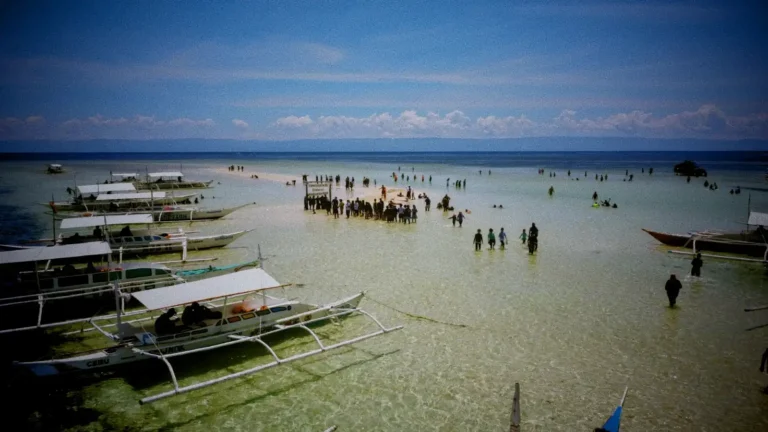
If whale watching is the primary reason for your trip, plan your Bohol travel for March through May. This window also coincides with the seasonal sandbar that appears on the island’s northwest side — a white-sand foreground that makes for outstanding drone photography before the monsoon shifts it.
The Northwest Reef Sanctuary
The marine sanctuary on Pamilacan’s northwest side is community-managed. A local guide and a paddle boat are required to enter — the fee is around ₱250 per person, paid directly to the community. The reef here is healthy: lush soft corals, massive sea fans, and cleaner wrasses working the coral heads in water that is calmer and clearer than most of the surrounding open sea. It is less trafficked than the reefs off Panglao, and it feels the better for it.
This is not a wall dive site — that is Balicasag’s domain — but as a community-managed snorkel experience with genuine marine density, the northwest sanctuary is the right complement to a morning on the water watching dolphins.
🔗 Book your Pamilacan Island tour with instant confirmation on GetYourGuide
🔗 Compare Pamilacan dolphin tour prices on Klook — free cancellation available
How to Book a Pamilacan Island Tour
The 200-Year-Old Spanish Fort
This is what separates a Pamilacan trip from a generic island hop, and it is the detail that travellers with any interest in Bohol’s colonial history will appreciate most.
On the island’s northeast side stands a Spanish-era fort — triangular in plan, built of rubble and cut coral block, with round buttresses at each corner. Embedded trusses in the structure suggest a second floor that was probably wood. It was built in the 19th century as a watch station against Moro pirate raids, part of a network of coastal fortifications that connected Pamilacan to similar structures in Loay, Baclayon, Panglao, and Tagbilaran. Near the fort stood a large wooden cross carved with an 1800s date, now housed under a small chapel nearby.
If you are departing from Baclayon Pier, it is worth adding a short stop at Baclayon Church before or after your crossing. Baclayon Church is one of the oldest coral-stone churches in the Philippines, built from reef blocks starting in 1595 — the same material as Pamilacan’s fort. The visual and historical thread between the two structures is not accidental. Bohol’s colonial heritage is written in coral, and the fort on Pamilacan’s shore is part of that continuous story.
The morning light on the fort’s coral walls is striking. Bring a camera and arrive with enough time to walk the northeast side of the island before the sun climbs too high.
Image alt text: “Spanish colonial fort Pamilacan Island Bohol northeast shore coral stone walls morning light”
“I didn’t expect a Spanish fort. I came for the dolphins and found 200 years of history too. The coral stone is in remarkably good condition. No crowds, no rope barriers — just the fort and the sea.”
— Clara R., Melbourne, Australia ⭐⭐⭐⭐⭐
Balicasag vs. Pamilacan: Which Island Fits Your Trip?
These two islands attract genuinely different travelers. The comparison is clean once you know what each one does well.
| Balicasag Island | Pamilacan Island | |
|---|---|---|
| Best for | Scuba diving, sea turtles, wall dives | Dolphin and whale watching, cultural heritage, off-grid atmosphere |
| Marine highlight | Vertical drop-off walls, black coral forest, sea turtle encounters | Deep-sea cetaceans, resident dolphin pods, northwest reef sanctuary |
| On-land experience | Small, quiet fishing community | 200-year-old Spanish fort, whale-bone village heritage |
| Snorkeling quality | Excellent — healthy reef in shallow water | Good in northwest sanctuary; limited elsewhere |
| Dive level needed | PADI Open Water and above | N/A — snorkeling only at sanctuary |
| Crowd level | Moderate (popular Panglao day-tour add-on) | Light — far fewer day-trippers reach this distance |
| Overnight option | Very limited | Liwayway Sa Pamilacan resort; homestays available |
| Best season | Year-round for turtles | March–June for whales; dolphins year-round |
| Distance from Panglao | ~6 km southwest, ~25–30 min by banca | ~25 km southeast, ~45–60 min from Baclayon |
Choose Balicasag if: You are a diver, or you specifically want a guaranteed sea turtle encounter in shallow, sheltered reef water. Compare the Balicasag island hopping tour on GetYourGuide to see side-by-side pricing.
Choose Pamilacan if: Dolphin or whale watching is the priority; you want the cultural and historical angle; you want a quieter, more local island experience without a resort crowd.
Custom loop option: A larger private banca can combine an early Pamilacan departure for dolphins, then loop to Virgin Island sandbar in the afternoon. This requires a bigger vessel and higher fuel costs — budget an additional ₱1,500–₱2,500 on top of the standard charter rate, and confirm sea conditions with your operator.
Balicasag Island Snorkeling Tour Rates
Getting to Pamilacan Island (and What It Costs)
From Baclayon Pier — This is the recommended departure point and the most cost-effective option. Baclayon municipality is approximately 6 km east of Tagbilaran City along the coastal highway. The crossing is 45 to 60 minutes by banca, depending on sea conditions. Baclayon Bohol Travel Guide
From Alona Beach, Panglao — Boats are available from Alona Beach, but the charter rate is higher because of the longer distance and the markup typical of Alona departures. If you are based on Panglao, the option is still viable — expect to add ₱500–₱1,000 to the standard Baclayon rate and allow 60–75 minutes for the crossing.
Cost breakdown (2025–2026 reference figures):
- Private banca hire from Baclayon Pier: ₱3,500–₱5,000 (depending on boat size and group)
- Environmental / entrance fee: ~₱100 per person
- Community guide for northwest sanctuary snorkel: ~₱250 per person (includes paddle boat)
- There are no ATMs or banks on Pamilacan — bring all cash in advance
For packaged tours that include the boat, guide, and sometimes lunch arrangements, the Bohol Tours Hub has a roundup of vetted operators running regular Pamilacan departures.
“We hired our own banca from Baclayon Pier — so much cheaper than booking from Alona. Our guide found a pod of spinners within 20 minutes and we stayed on the water for two hours. Then lunch in the village. Best day of our trip.”
— Jennifer M., Makati ⭐⭐⭐⭐⭐
Photography and Drone Tips
Pamilacan rewards early risers and patient photographers equally.
Drone: The island’s heart shape is genuinely visible from above — fly at mid-morning (around 8:00–9:00 AM) when the low sun angle creates the best contrast between the turquoise reef “skirt” around the island and the deep cobalt of the open Bohol Sea. During March through May, the seasonal sandbar on the northwest side provides a white-sand foreground for landscape compositions. The sandbar shifts with monsoon seasons, so do not count on it outside this window.
On the water: Depart at 5:30–6:00 AM for the calmest, glassiest crossing. The open channel picks up wind and chop by mid-morning. Early light is also softer and more flattering for dolphin photography — high noon sun creates harsh shadows and bleaches the color out of the water.
On land: The Spanish fort photographs well in morning light. Stand with the sea behind the fort’s coral-block walls. The village itself — old bones mounted on wooden walls, traditional banca boats pulled up on the sand, children who know every face on the island — tells a visual story with very little staging required.
Image alt text: “Pamilacan Island Bohol aerial drone view heart-shaped island cobalt Bohol Sea turquoise reef fringe”
Where to Eat and Sleep on the Island
Food: Pre-arrange lunch with a village homestay before you arrive — this is not something to improvise on arrival. The standard meal is grilled fish, liempo (grilled pork belly), and lato (seaweed salad in a light vinegar dressing). Simple, fresh, and entirely right for a day spent on open water. There are no commercial restaurants on the island.
Overnight stays: Liwayway Sa Pamilacan is the island’s small resort for overnight guests. Electricity runs only at night. Phone signal is intermittent at best. The off-grid reality is not a flaw — for the right traveler, it is the main attraction. Visitors who stay overnight consistently describe the stars over the open Bohol Sea as one of the best things they have seen in the Philippines.
For most travelers: A day trip from a Panglao or Tagbilaran base is the more practical arrangement. Overnight on Pamilacan is genuinely special, but it requires genuine embrace of limited infrastructure.
🔗 Find your Panglao base hotel on Booking.com — compare resort prices with free cancellation →
🔗 Check Agoda for Panglao accommodation deals — often cheaper for smaller local properties →
Where to Stay in Panglao Island
What to Bring for an Open-Sea Crossing
Pamilacan sits in open water, not sheltered inside a reef lagoon. The crossing from Baclayon is a genuine open-sea journey, and it requires slightly different preparation from a Panglao reef snorkel trip.
Pack these:
- Waterproof bag or dry sack for your phone, camera, documents, and anything that cannot get wet — spray comes over the bow
- Sea sickness tablets if you are prone — take them 30 minutes before departure, not after the boat is moving
- Rash guard and reef-safe sunscreen — you will be on open water with no shade cover for the full crossing
- Rehydration salts or electrolytes — the heat and sea breeze dehydrate you faster than you expect
- Enough cash for entrance fees, guide fees, and pre-arranged lunch — no card machines on the island
- At least 1.5 litres of water per person
- A light windbreaker — the 5:30 AM crossing is cold even in the dry season, especially at speed
Leave behind: Glass bottles, heavy luggage, white clothing if you plan to snorkel near coral.
Top 10 Marine and Island Adventures in Bohol
Practical Tips for Visiting Pamilacan Island
Best time to go: Year-round for dolphins. March–June for whale sightings. November–April (dry season / amihan) for the most reliable crossing conditions. Avoid booking a fixed departure window in July–September — the habagat can ground banca boats with little notice.
Departure time: 5:30–6:00 AM. This is not flexible if you want glassy water, early dolphin activity, and the best photography light. Mid-morning departures mean choppier seas and a less productive dolphin watch.
Book ahead: Arrange your boat and guide at least the day before, preferably two or three days ahead during peak season (December–April). Do not arrive at Baclayon Pier hoping to organize everything on the spot.
Etiquette in the village: Pamilacan is a working fishing community. Ask before photographing people or their homes. The whale bones on the walls are personal history — treat them with the same respect you would give a family photograph. The conversion from hunting to guiding was a genuine sacrifice, and the community takes its stewardship of the marine environment seriously.
Children and seniors: The island itself is a calm, safe community. The open-sea crossing requires consideration — it can be choppy, and very young children may find it uncomfortable. Sea sickness tablets are worthwhile for the whole family.
Best Bohol Island Hopping Tours
Frequently Asked Questions — Pamilacan Island
What makes Pamilacan Island different from Balicasag?
Balicasag is a world-class dive destination with wall dives, turtles, and healthy shallow reef. Pamilacan is defined by deep-sea cetaceans and a remarkable conservation story — former whale hunters who became wildlife guides. Snorkeling exists at the northwest sanctuary, but Pamilacan is about what swims in the open channel beyond the reef. Each island serves completely different travelers.
How long is the boat ride to Pamilacan Island?
From Baclayon Pier it’s 45 to 60 minutes depending on sea conditions and wind. From Alona Beach in Panglao it’s approximately 60 to 75 minutes. Depart before 6:30 AM for the smoothest crossing — conditions can deteriorate noticeably by mid-morning when the wind picks up over the open Bohol Sea.
When is whale watching season at Pamilacan?
The prime window for large cetacean sightings is March through June, before the southwest monsoon picks up. Bryde’s whales and sperm whales are the most commonly seen large species. Smaller cetaceans — pilot whales, melon-headed whales, pygmy killer whales — can be spotted year-round. Spinner dolphins are residents and visible throughout the year.
What dolphins will I see at Pamilacan Island?
Spinner dolphins, bottlenose dolphins, and Risso’s dolphins are most consistently sighted. Fraser’s dolphins and spotted dolphins are also present. All major species travel in pods and are frequently observed riding the bow wake of passing boats or surfacing in rapid succession.
How much does a Pamilacan Island trip cost?
Budget ₱3,500–₱5,000 for a private banca from Baclayon Pier, plus ₱100 environmental fee and ₱250 per person for the community snorkeling guide. Packaged tours including boat and guide are available through operators on the Bohol Tours Hub and typically include lunch arrangements, making the total per-person cost competitive.
Can I stay overnight on Pamilacan Island?
Yes. Liwayway Sa Pamilacan is the island’s small resort. Homestays are also available through local arrangements. Electricity runs at night only; phone signal is limited. For most travelers, a day trip from a Panglao or Tagbilaran base is more practical — but overnight is genuinely memorable for those willing to embrace limited infrastructure.
Is Pamilacan Island safe for families with children?
The island community is calm and welcoming. The open-sea crossing requires consideration — it can be rough, and very young children may find it uncomfortable. Sea sickness tablets are recommended. The northwest sanctuary snorkel is calm and suitable for older children who can swim confidently. Bring all cash and water you need — nothing is available to purchase on the island.
What should I bring for the open-sea crossing to Pamilacan?
Pack a waterproof bag for your phone and camera, sea sickness tablets if prone, rash guard and reef-safe sunscreen, rehydration salts, enough cash for fees and lunch, at least 1.5 litres of water per person, and a light windbreaker. The 5:30 AM crossing is cold even in the dry season. Leave glass bottles and heavy luggage behind.
Is the sighting rate for dolphins really near 100%?
Yes. The guides’ uncanny ability to locate cetaceans — developed over generations reading the open Bohol Sea — produces a sighting rate approaching 100%, a figure no other whale and dolphin watching destination in the Philippines comes close to matching. These are not generic skills but product of generations on this specific water.
How does getting to Pamilacan from Alona Beach compare to Baclayon?
Boats from Alona Beach are available but cost more due to longer distance and typical Alona markup. Expect to add ₱500–₱1,000 to the standard Baclayon rate and allow 60–75 minutes for the crossing. Baclayon Pier remains the most cost-effective departure point for this destination.
What is the history behind the name “Pamilacan”?
The word traces to pamilac — the Visayan word for harpoon. It is a working name, not poetic, chosen by a fishing community that for generations made its living hunting the very creatures that now bring visitors to the island. Whale sharks, manta rays, and dolphins were once quarry, not spectacle.
Should I combine Pamilacan with other islands?
A larger private banca can combine an early Pamilacan departure for dolphins, then loop to Virgin Island sandbar in the afternoon. This requires a bigger vessel and higher fuel costs — budget an additional ₱1,500–₱2,500 on top of the standard charter rate. Confirm sea conditions with your operator and book well in advance for flexible routing.
Have more questions about travelling to Bohol? Visit our complete Bohol FAQ for answers to the most common questions travellers ask.
Plan Your Pamilacan Island Trip
Pamilacan Island offers something that has become genuinely rare in Philippine island travel: a destination with a real story behind it, and guides who carry that story in their hands. The name comes from the harpoon. The men who once held it now point you toward the dolphins. That conversion — from hunters to guardians, achieved by a small island community on their own terms — gives the entire experience a moral weight that pristine reef alone cannot provide.
Leave Baclayon Pier before 6:00 AM. Bring cash and enough water. Trust your guide. The cobalt channel, the Spanish fort in the morning light, the grilled fish and lato for lunch in the village — these things will take care of themselves.
🔗 Book your Pamilacan Island dolphin watching tour on GetYourGuide →
🔗 Lock in your Pamilacan Island tour on Klook — free cancellation available →
🔗 Find your Panglao base hotel on Booking.com — compare resort prices →
🔗 Check Agoda for Panglao accommodation deals
Best Bohol Island Hopping Tours
Support our site by booking through our trusted affiliate partners. When you use the links in this article, we earn a small commission at no additional cost to you. This helps us keep our content free and our guides updated for travelers visiting Bohol.